From Big Feelings to Bright Futures
Why VKRP Measures and Supports Mental Health in Early Childhood
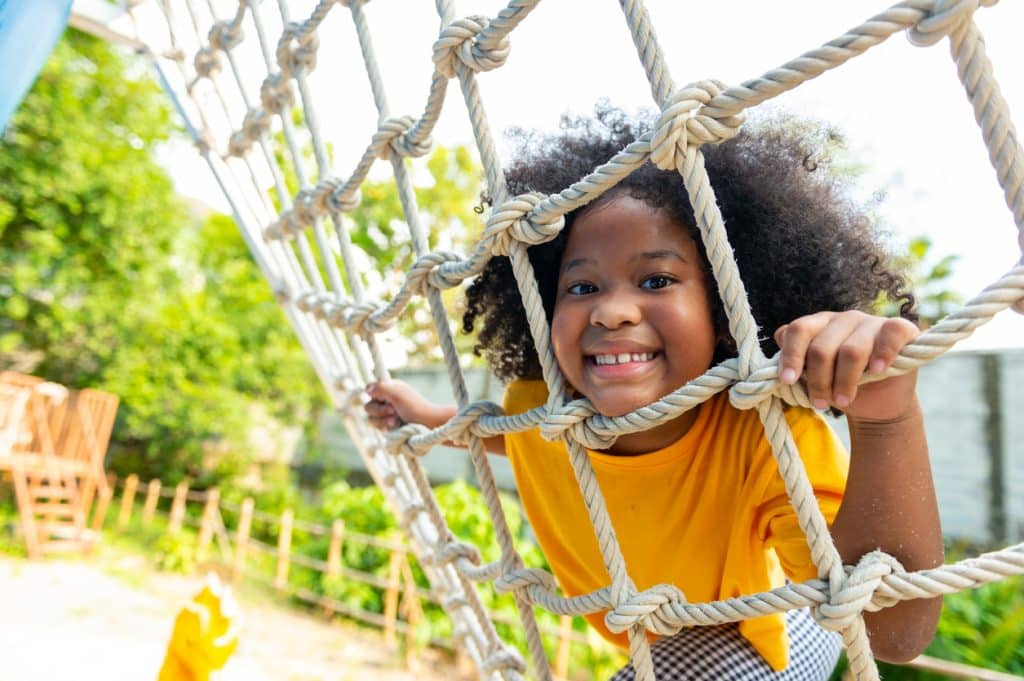
Experiencing different types of emotions—from joy and excitement to sadness and frustration—and learning how to manage them is a normative part of children’s development. In some cases, such as under conditions of heightened or prolonged stress or instability, children may appear emotionally distressed or disengage socially. These behaviors can be signs that children need extra support with their mental health well-being. Mental health well-being encompasses a child’s emotional and relational well-being, including managing challenging emotions (like frustration or anger); showing positive emotions and responding positively to others (through smiling or laughter); and a lack of persistent anxiety, worry, or withdrawing from others. Positive mental health well-being is foundational to children’s learning and sets them on a successful path as they move into the early elementary grades.
Why does VKRP measure children’s mental health well-being in addition to social skills and self-regulation?
In 2021, in response to the COVID-19 pandemic, VKRP added five items to understand teachers’ perceptions of children’s mental health well-being. The items are: (1) calms down after becoming upset, frustrated, or angry; (2) adapts when plans change, goes with the flow; (3) is withdrawn from people or activities (reverse scored); (4) appears worried or anxious (reverse scored); and (5) smiles, laughs, and responds positively to other children or adults. These five mental health well-being items provide complementary information primarily related to children’s emotions that is not captured through the social skills or self-regulation scales of the CBRS.
Additionally, VKRP added a single item in which teachers report on their overall level of concern for a child’s social-emotional well-being on a scale of 1 (“not at all”) to 5 (“extremely”). As children were transitioning to early care and education programs and schools after a period of significant stress and disruption due to the pandemic, it was especially important to understand how children were doing emotionally and to support children who might need extra resources or services.
What have we learned about children’s mental health well-being from VKRP?
Scores for the five mental health well-being items are averaged to create an overall score, which ranges from 1 to 5, with higher scores representing better mental health well-being. Across three academic years, from 2021-22 to 2023-24, the average mental health well-being score is around 4.2, indicating that children are generally doing well emotionally. Teachers rate children’s mental health well-being slightly higher in the spring compared to the fall.
Although the average mental health well-being score is relatively high across all children, teachers reported significant concerns for the mental health well-being of a considerable number of students. Overall, across academic years 2021-22 to 2023-24, teachers report being moderately, very, or extremely concerned about the mental health well-being of 13.5% of kindergarten students, 18% of 4-year-olds, and 22% of 3-year-olds. These findings indicate elevated concern for a relatively large group of students, especially among 3-year-old and 4-year-old children. Most 3-year-old and 4-year-old children who have participated in VKRP to date attend pre-kindergarten programs that serve children who meet eligibility requirements such as having low family income or a disability. These differences in the composition of 3-year-old and 4-year-old children compared to kindergarten students are important to note when comparing findings across age groups. We also see that among kindergarten students, children whom teachers are moderately, very, or extremely concerned about are much less likely to meet the overall VKRP readiness benchmark and are more likely to score below the benchmark in literacy, mathematics, social skills, and self-regulation.
How can adults best support children’s mental health well-being?
Although it is encouraging that by and large teachers perceive young children to be happy and engaging positively with others, VKRP data also highlight that some children need additional supports to bolster their mental health well-being and prevent early concerns from escalating in the future. If a teacher reported being moderately, very, or extremely concerned about a child’s mental health well-being, or if a child’s average mental health well-being score is low (an average score of 2 or lower), the VKRP team recommends considering the following steps to help the teacher and their team provide additional social and emotional supports:
- Gather more information to inform your supports for an individual child. After identifying which children a teacher perceives as having greater struggles with their mental health well-being, it is important to dig deeper to understand what the child is feeling/experiencing and potential root causes. To gather more information, observe the child across a variety of settings, activities, and times of the day; talk to the child to get a better sense of how they are feeling; and talk with other educators to share your concerns and check-in with the child’s family/caregivers.
- Based on what you learn, connect to aligned classroom resources. Explore the Early Childhood Education Resource Hub where there are many resources to support young children’s mental health well-being in the classroom. A good starting place is to consider ways the teacher and school staff can strengthen their relationships with the child, reinforcing to the child that adults care for them and are there to help. Spending quality one-on-one time with the child and listening to their interests, questions, and feelings can help forge stronger bonds with children that will help them feel connected to adults and feel safe enough to take risks in the classroom (e.g., playing with a new friend even if they are anxious). Another helpful resource is National Center for Pyramid Model Intervention’s A Guide for Early Childhood Professionals to Support Young Children’s Resilience.
Consult the school counseling/mental health well-being team or school/program leadership team, if after gathering additional information the teacher discovers that a particular child or group of children need further and more intensive supports beyond the classroom. Potential services that could benefit the child/family include Early Childhood Special Education (ECSE) run through the local public school system, home visiting, or consultation with the child’s pediatrician. If a child receives outside services for their mental health well-being, classroom teachers and school staff should continue to implement supportive practices when the child is in their care.
By understanding young children’s mental health well-being strengths and needs, implementing supportive practices in the classroom, and connecting children and families to additional supports when needed, we can promote all students’ mental health well-being and set a strong foundation they will build on in years to come.
More Questions for the VKRP Team? VKRP provides support via the online chat feature when you are in the system, via email at vkrp@virginia.edu, and via toll free at 866-301-8278.